 Block History
History games for kids: a free diorama you can explore
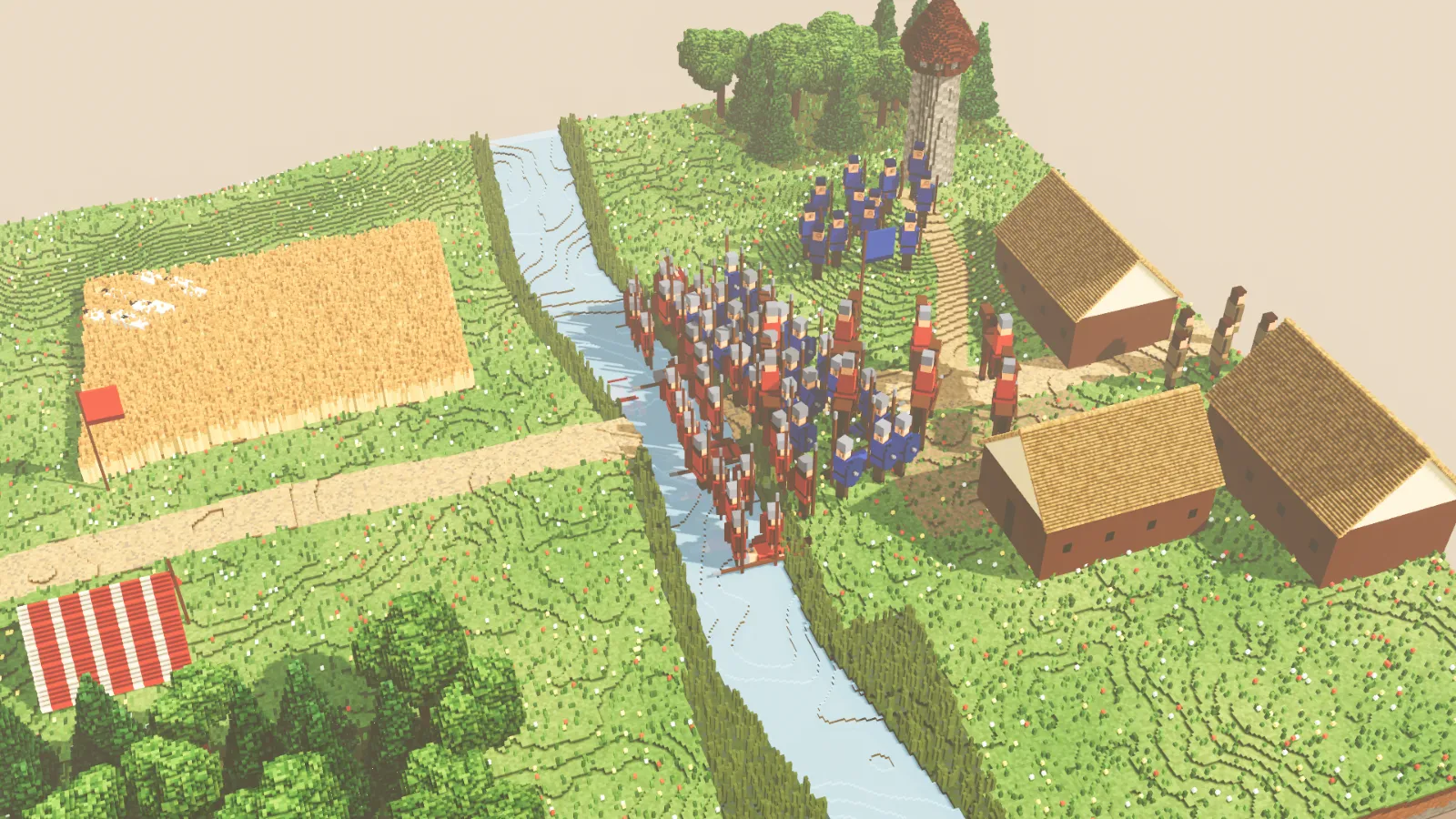
Block History isn't a game with scores. It's a block diorama of a real moment in history that kids can play, pause and walk around, free in the browser.
If you’re looking for history games for kids, here is a free one that works a little differently. Block History has no score and no winning. It rebuilds a real moment as a block diorama, and your child plays it, pauses it, and looks around to see where everyone stood and how it moved. It runs in the browser and on Mac and Windows. There are no accounts, no sign-ups and no ads.
We should say plainly what it is. It is not a quiz, a board game or a battle you command. It is closer to a model village that moves, with a story playing out in it.
What your child can do in a scene
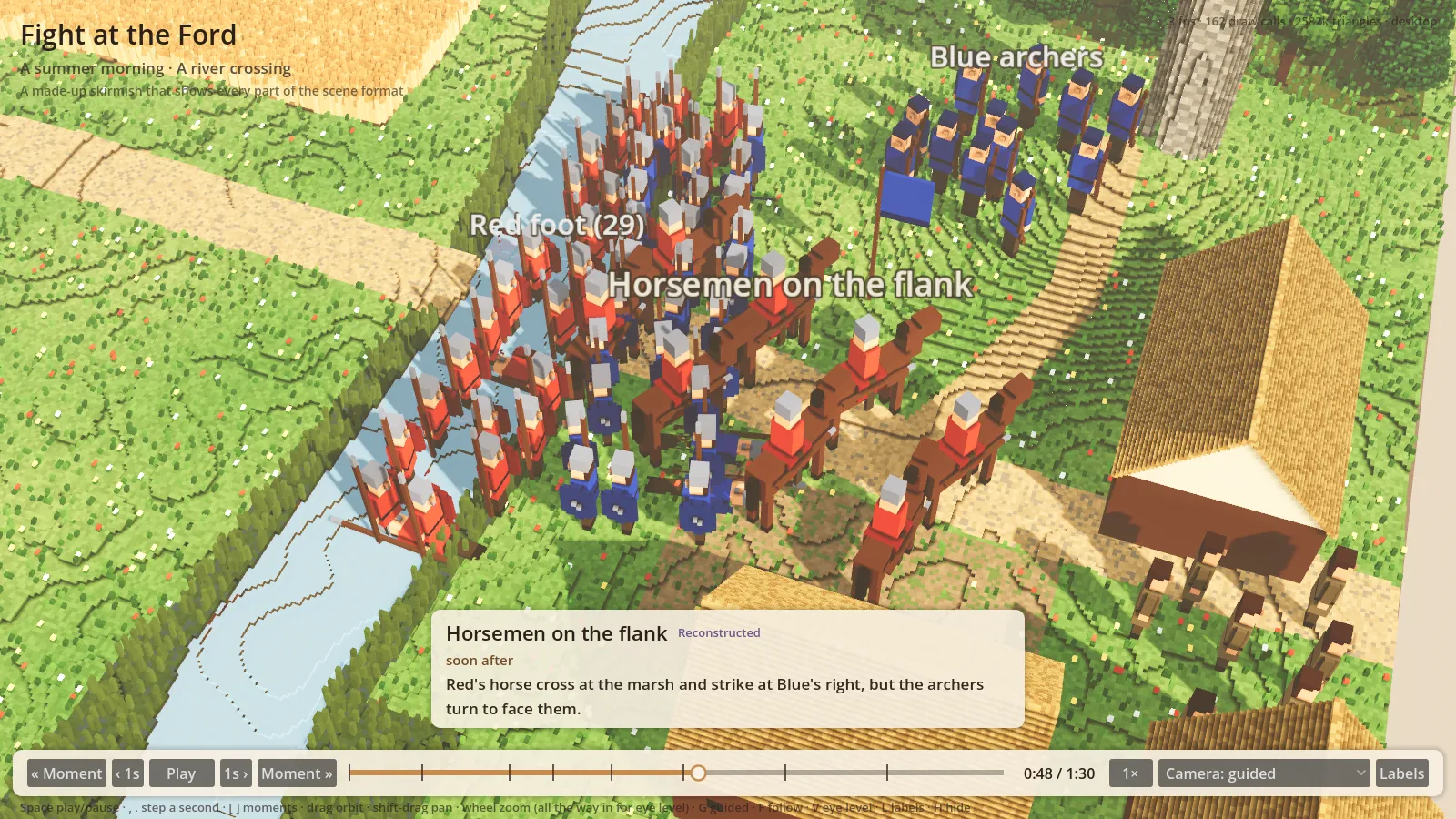
Every scene is a short piece of history set on a small patch of ground. You can:
- Play it and watch the moments happen in order.
- Pause on any moment and take a long look.
- Scrub back and forth along the timeline to see what came before and after.
- Step forward one moment at a time.
- Follow one unit, such as a single group of soldiers, and see the day through their movements.
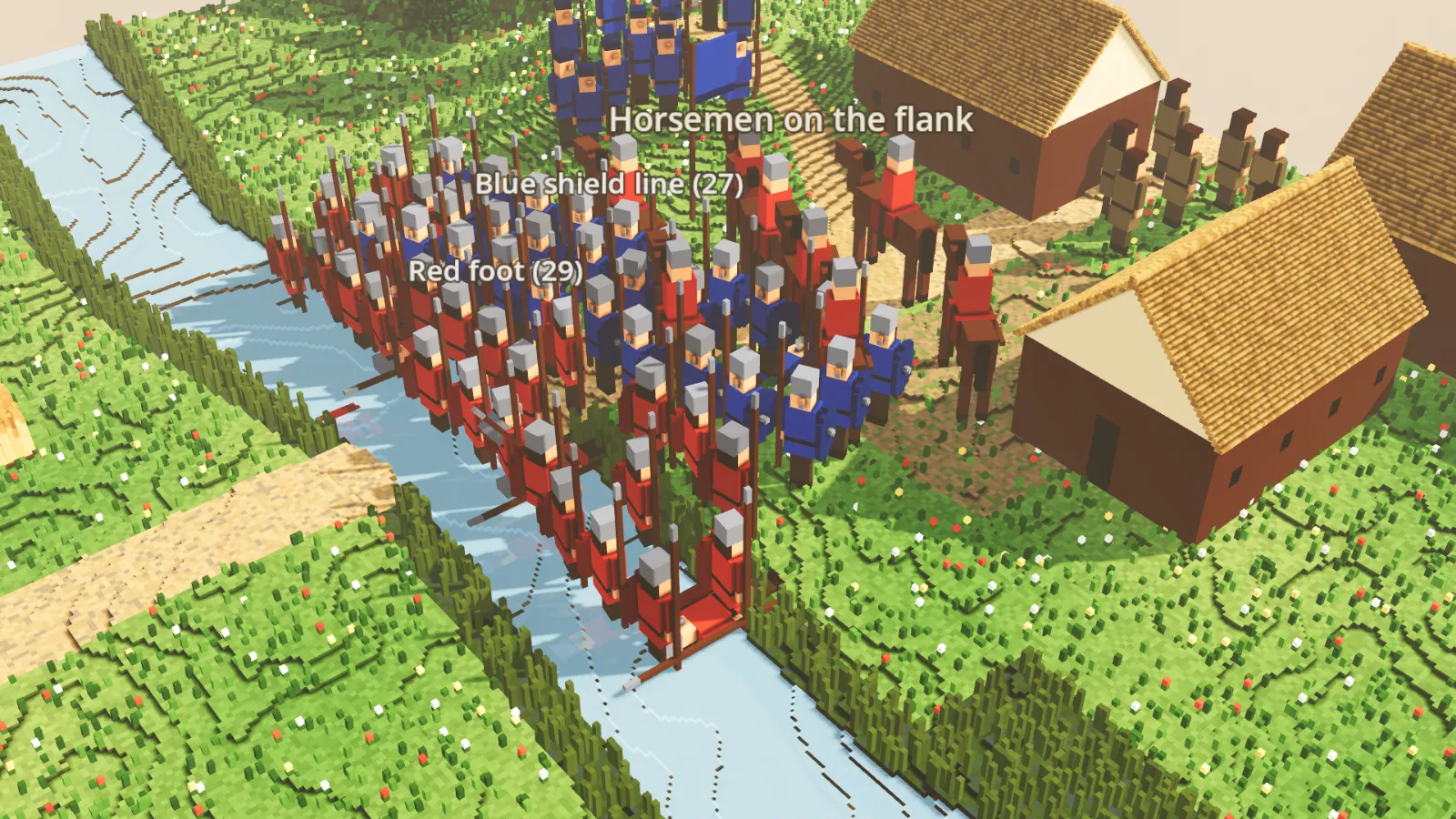
- Stand at eye level and look at the scene the way someone there might have.
Many history lessons say “the armies met at the river.” Here a child can see the ground itself, whether a hilltop, a village road or a harbour, and which side stood where. That is the part a list or a worksheet can’t give.
The three scenes
We started with three. Each one begins with the sources: the ground, the people, and the moments in order.
- Alfred at Edington (878)
- Lexington and Concord (1775)
- The sinking of the Mary Rose (1545)
You can find them all on the scenes page. You can also open Alfred at Edington, Lexington and Concord or the Mary Rose straight in your browser.
What is known and what is reconstructed
History is full of gaps, and we don’t paper over them. Each moment in a scene is marked established, likely or reconstructed. Established means the sources say it; likely means they point that way. Reconstructed means we filled in the picture to make it work, because the sources don’t say exactly where someone stood or how a movement went.
This gives a child, and a parent, something good to talk about. Ask “How do we know this?” and “What would you want to find out?” Where sources disagree, we say so. Hard events are told plainly and gently, with no gore, so the scenes are suitable for curious kids.
For parents, homeschoolers and teachers
Because you can pause on any moment, a scene works well as a shared activity. Play it through once, then go back and follow one unit. Or stop on a single moment and ask what each person there might have seen. Teachers can put a scene on the projector and pause on any moment for the whole class. There is more on how it works and for teachers and homeschoolers.
If your child wants a game with points and levels, this isn’t that. If they like looking closely at how things fit together, it might be just right.
Block History is made by Matt Pritchett.
Play this scene in your browser, or download it for Mac or Windows. Teachers: put it on the projector and pause on any moment.